Initiated shortly after my relocation to Copenhagen in 2015, the project evolved over several years, culminating in the summer of 2021. As a queer non-native Dane Jew, I approached this history not from within a shared national identity, but as someone attuned to the tensions embedded in public spaces and collective memory.
The project was shaped by three distinct events I encountered in Copenhagen:
March Music at the Station
One night, while wandering the city, I heard loud march music echoing from afar. Following the sound, I discovered it came from the back entrance of Copenhagen’s Central Station. Curious, I returned the next morning and asked the station manager about it. They explained that the music was played deliberately – a method borrowed from Germany – to deter drug users and homeless individuals from loitering in the area.
While walking through a rather central park in Copenhagen, my partner pointed to a crumbling concrete block and remarked that Nazi Danes were executed there. I was stunned as there was no sign or plaque to acknowledge what had occurred at that site. Even today, this critical piece of history remains unmarked and largely unspoken.
Upon relocating to Denmark, I took up residence in the former home of composer Hans Christian Lumbye, best known for his composition “Champagnegaloppen”. As an immigrant and clear outsider to the category of pæredansker (ethnic Dane), inhabiting the very space where this iconic composition was written, and by an artist whose works feature most prominently in the Danish Culture Canon, felt very ironic.
ABOUT THE TITLE: “SKATE PARK 30: CHAMPAGNE AND TATTOOS”
While the first part of the title is very straightforward – naming a skate park by the number of people who were executed on that spot, the second part of the title, “Champagne and Tattoos”, refers to the musical elements within the installation.
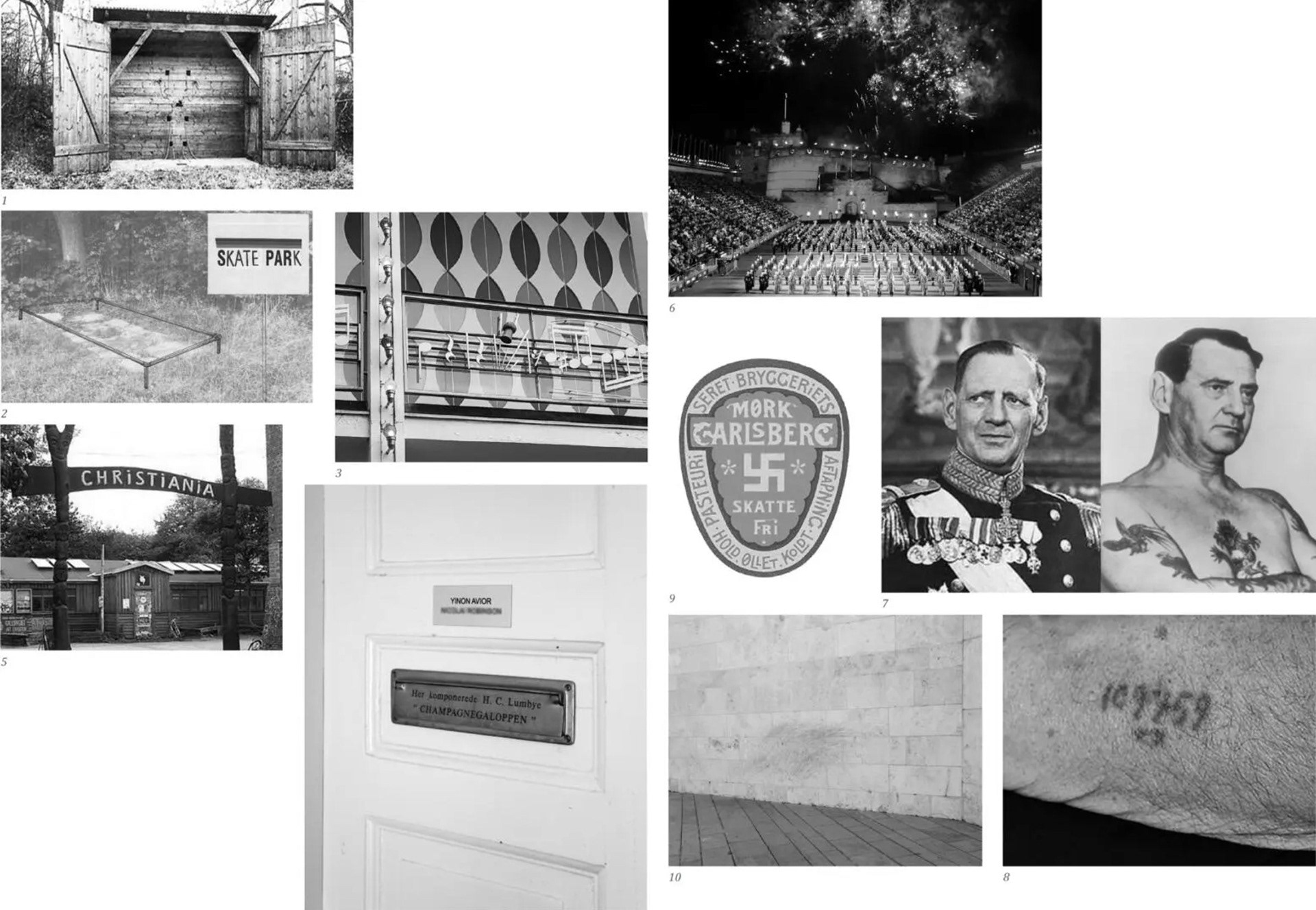
Image references
1. Picture of the original execution shed.
2. The 1st sketch for the skatepark, 2015.
3. The notes of H. C. Lumbye’s Champagnegaloppen welded to the balcony of The Tivoli Concert Hall. The opening note is a popping cork.
4. My door at Sankt Peders Stræde, Copenhagen, with the official plaque.
5. The sign at the entrance of The Free Town – Christiania.
6. A documentation from The Royal Edinburgh Military Tattoo.
7. The tattooed king of Denmark Frederick IX.
8. Tattooed numbers on Holocaust survivor's forearm.
9. Carlsberg's logo prior to the second world war.
10. Skateboard marks on a public walls.
The skatepark opened on September 3rd 2021. As it was set unfenced in public territory, the park was accessible 24/7. For the first three consecutive weekends the performance installation came to life every Friday, Saturday, and Sunday from 18:00 to 19:00: A curated “tattoo” composed of Lumbye’s galops and marches played from a single speaker, reframing his compositions within a militaristic and nationalistic context.
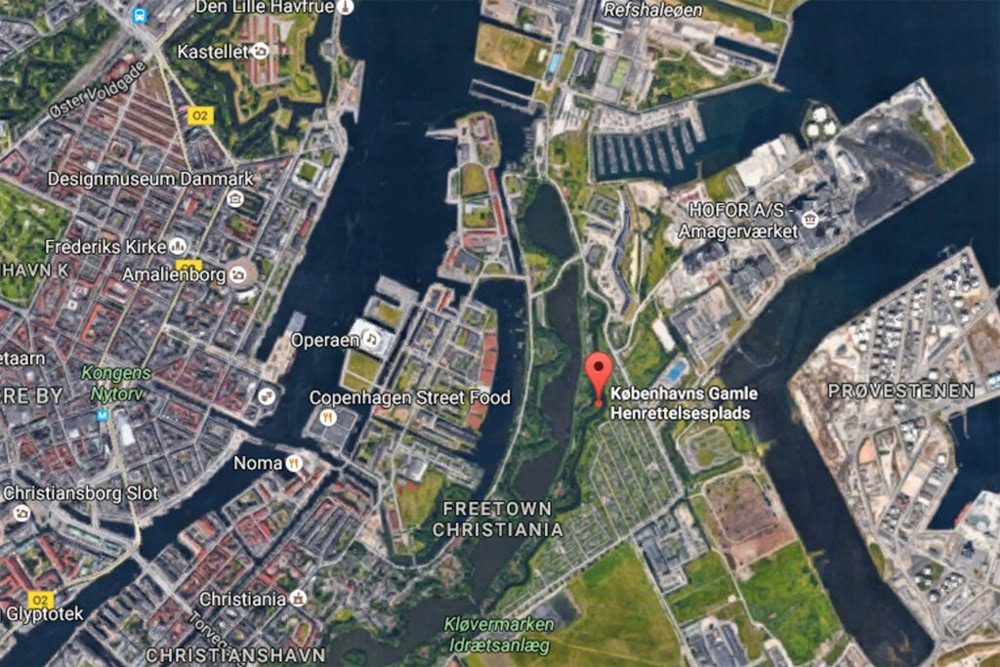
The location of the execution spot in Copenhagen
When we examine music history, there has always been fluidity within musical genres. Past composers often wrote pieces that were regarded as something different than what they were intended to be, and there are various reasons for that. While composers sometimes were not thinking about strictly fitting their compositions into specific categories or were purposefully trying to bend/break rules for dramatic affect, in many cases the terminology was simply inconsistent.
Music theory and musicology attempt to clarify issues such as terminology in order to give us a better understanding of music and the circumstances surrounding its composition, but these studies cannot entirely eliminate inevitable musical gray zones which sometimes are a result of the evolution and changing nature of musical terms throughout history.
The musical term “tattoo” is applied to military displays or presentations to which the public is admitted, a definition that leaves a wide-open door for several types of music to fall into this classification. Following that fact, marches played at military bands’ concerts to which the public is admitted can rightfully be classified as tattoos.
But what happens when such pieces are performed for non-military functions? This question should be asked, as it is common for many types of music intended for a practical, non-concert function—from chamber music originally meant to be played privately for a small group of friends to waltzes intended to be danced to—to make their way into the concert hall. And what about genres that share the same, or similar, elements with other genres, and are not performed for the original purpose tied to them? For example, even though the galop was a popular nineteenth-century ballroom dance, many examples, such as Hans Christian Lymbye’s famous Champagnegaloppen, are rather march-like due to their duple 2/4 meter, repetitive rhythms, and lively tempo also associated with several types of marches.
Although classification of music into categories is intended to help from a learning standpoint, music can, and is often, forced into less conventional categories depending on the context. Therefore, while forcing a setlist of marches and galops composed by H.C. Lumbye into the “tattoo” category might seem extreme, it technically isn’t incorrect.
Dr. Justin Bland
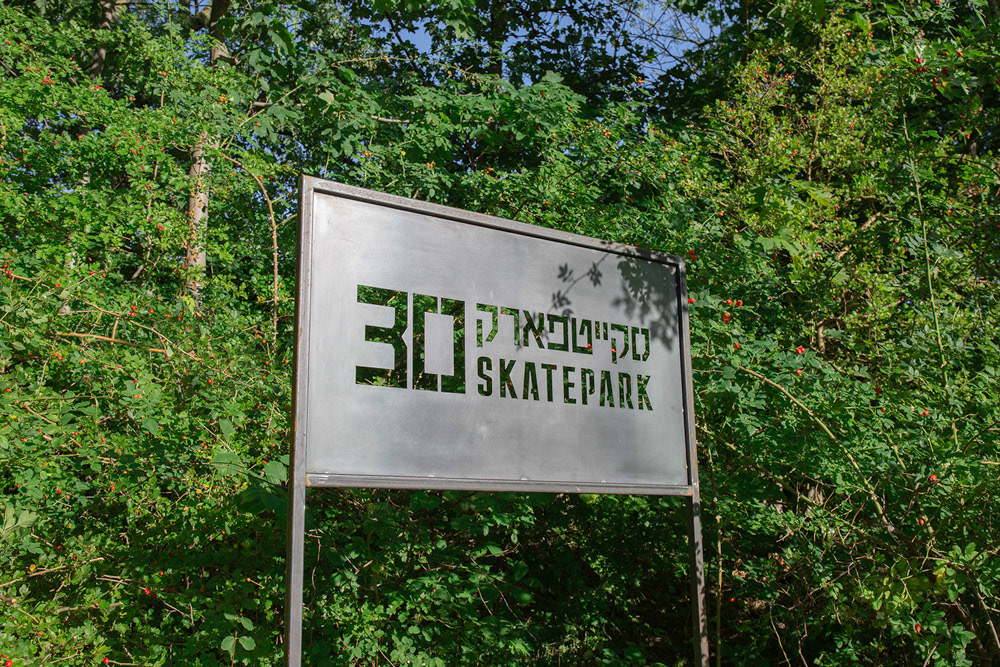
Metal sign placed by the execution spot
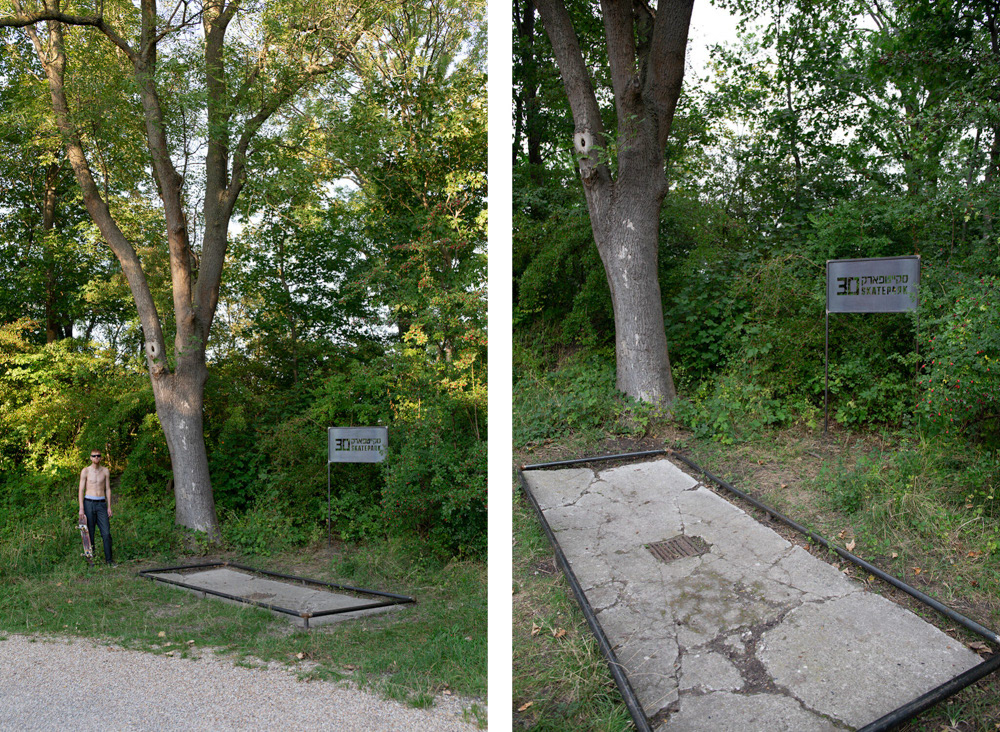
Costume made metal rail surrounding the execution spot
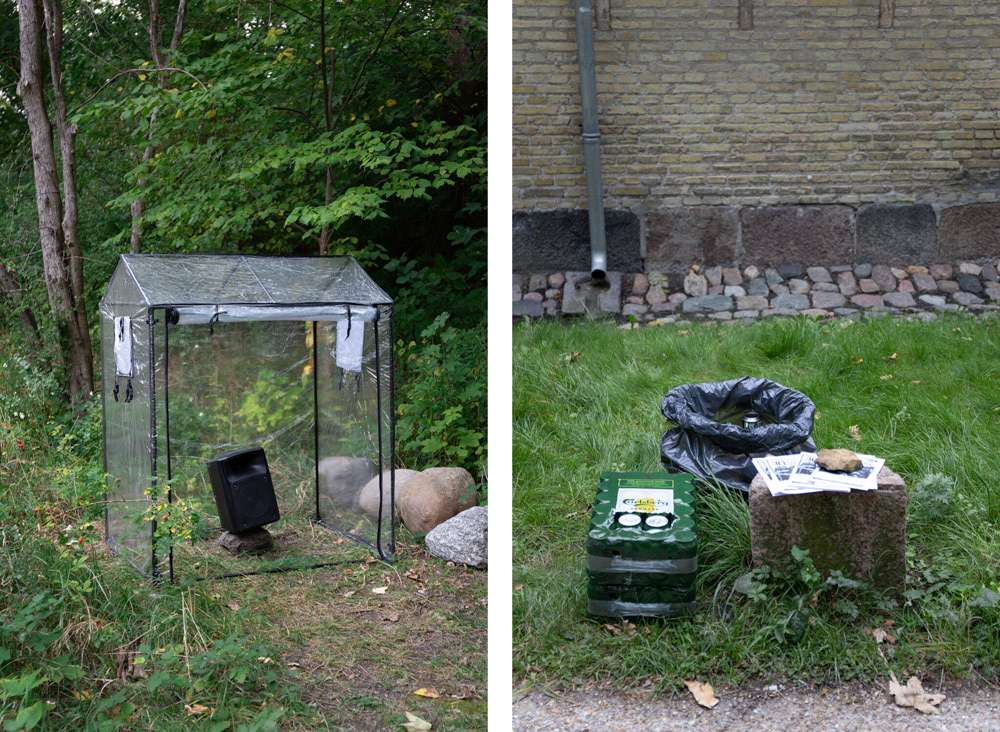
On the left: the sheltered speaker that played the marching melodies.
On the right: brochures with information about the installation and free Carlsberg beers and a black trash bag.
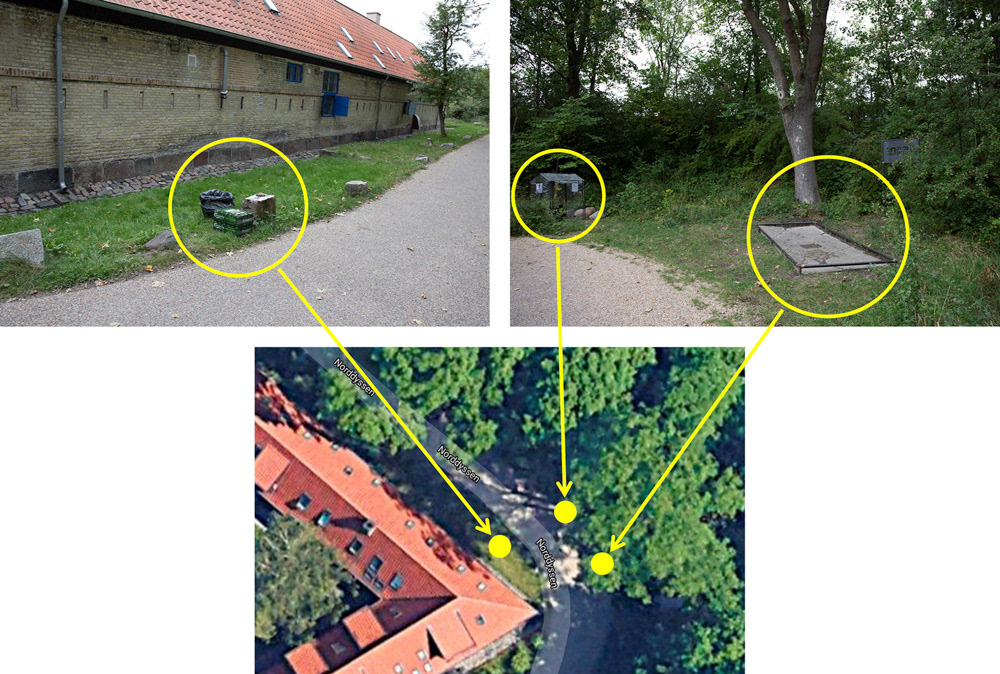
Geographical placement of the various instruments
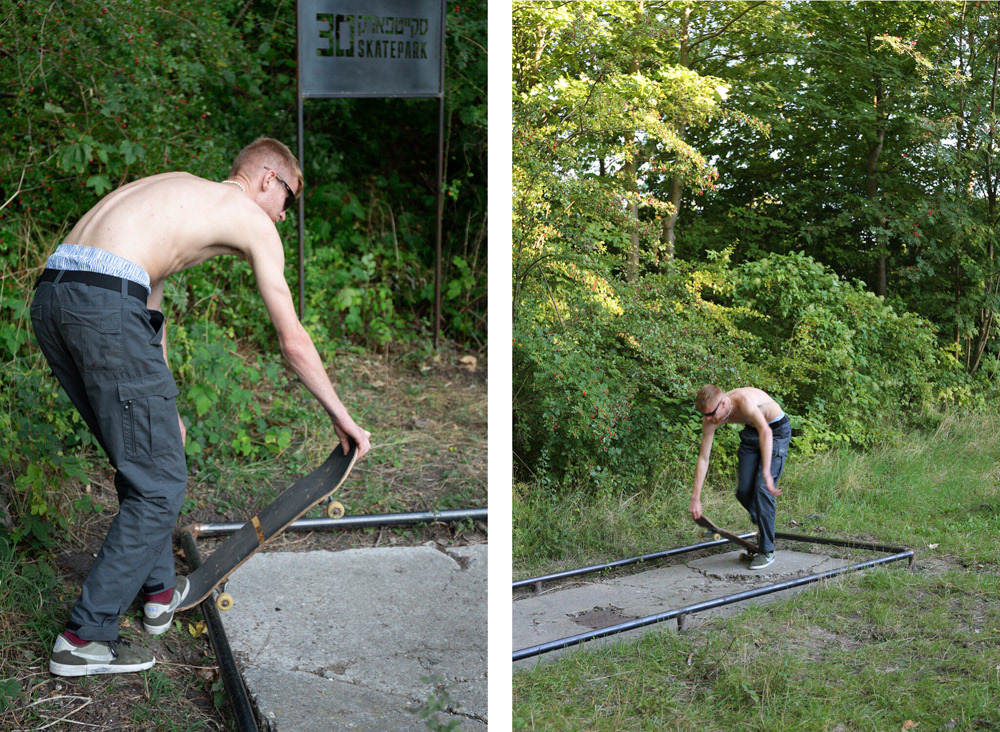
For three consecutive weekends at 18:30 - the exact middle point of the tattoo - a pæredansker (ethnically Danish person) performed a skate routine on the 6 m² concrete square
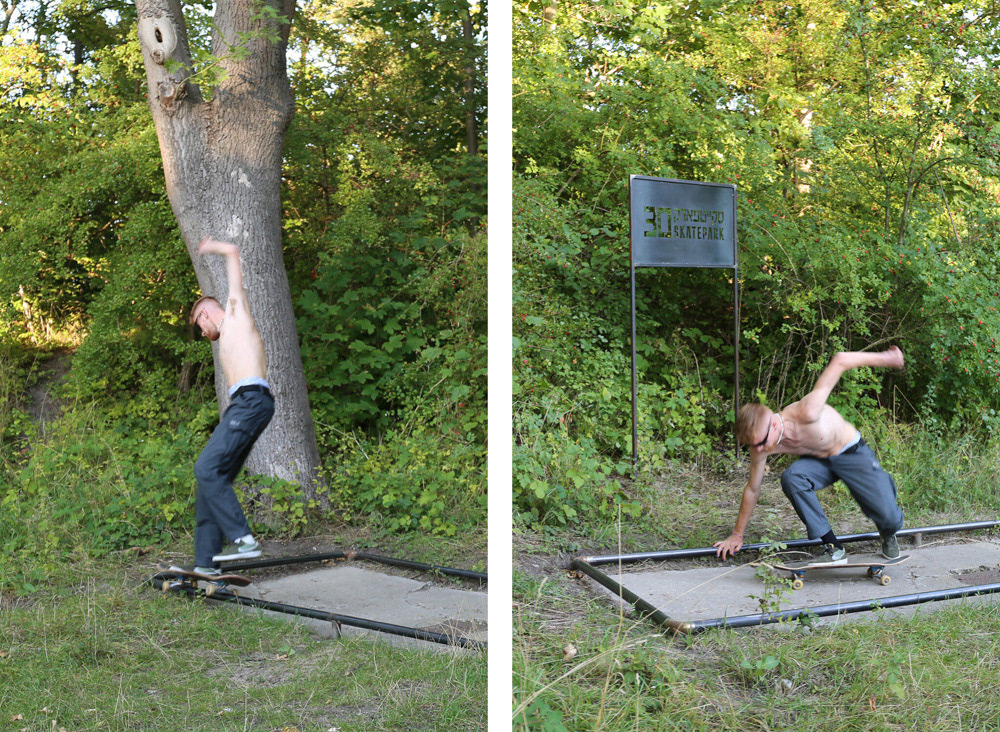
The skater left the execution spot once the skate routine was over
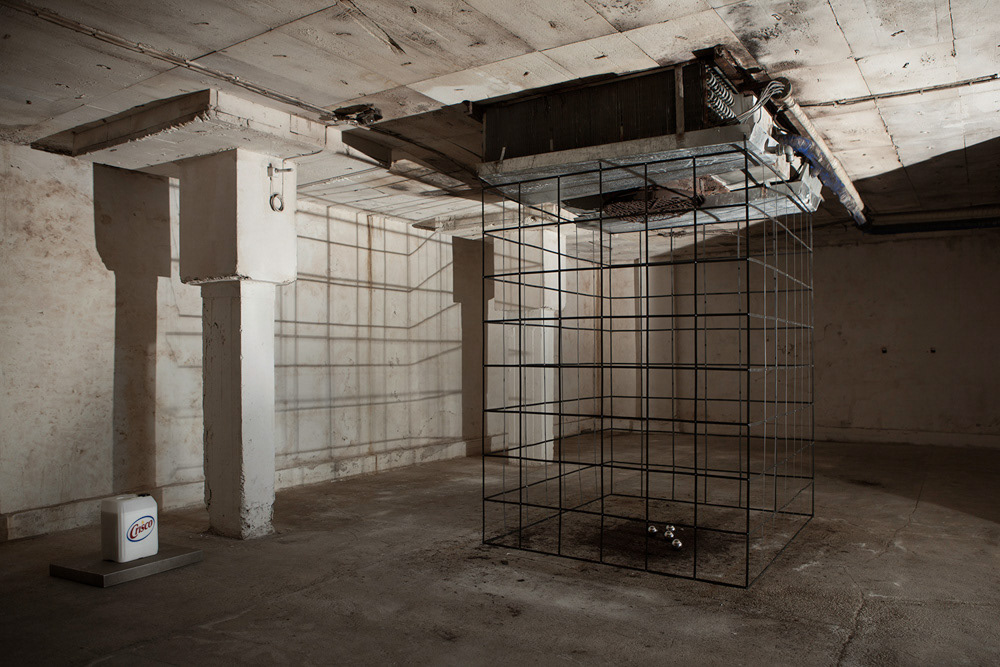
Cage
Plastic straps, cotter pins, wood, and metal
280 X 250 X 220 cm

Installation view
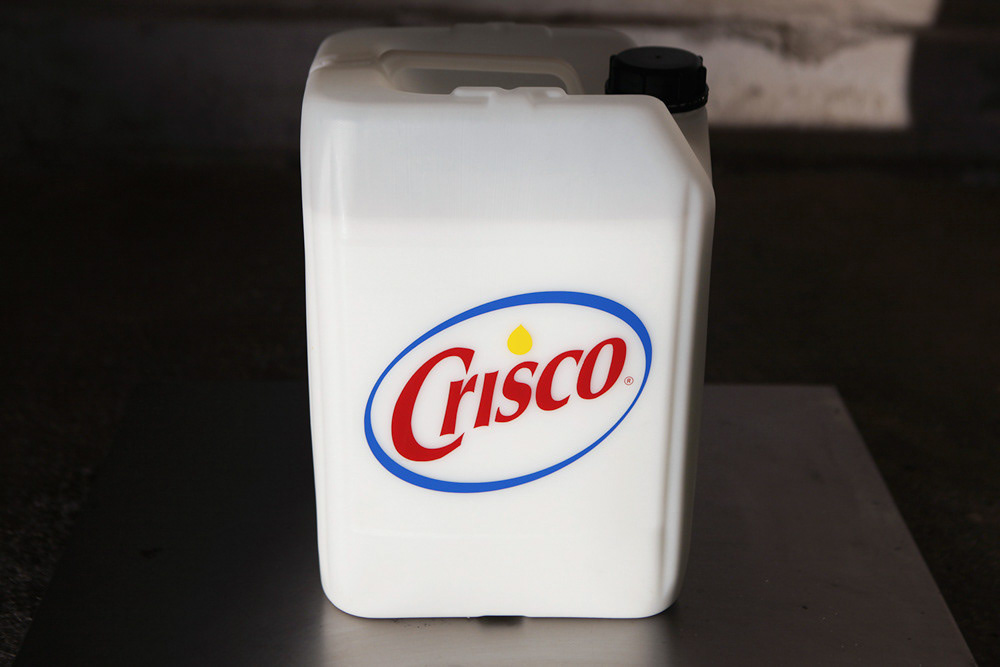
Crisco gallon
Plastic gallon, vinyl, synthetic liquid
27 x 40 x 23 cm
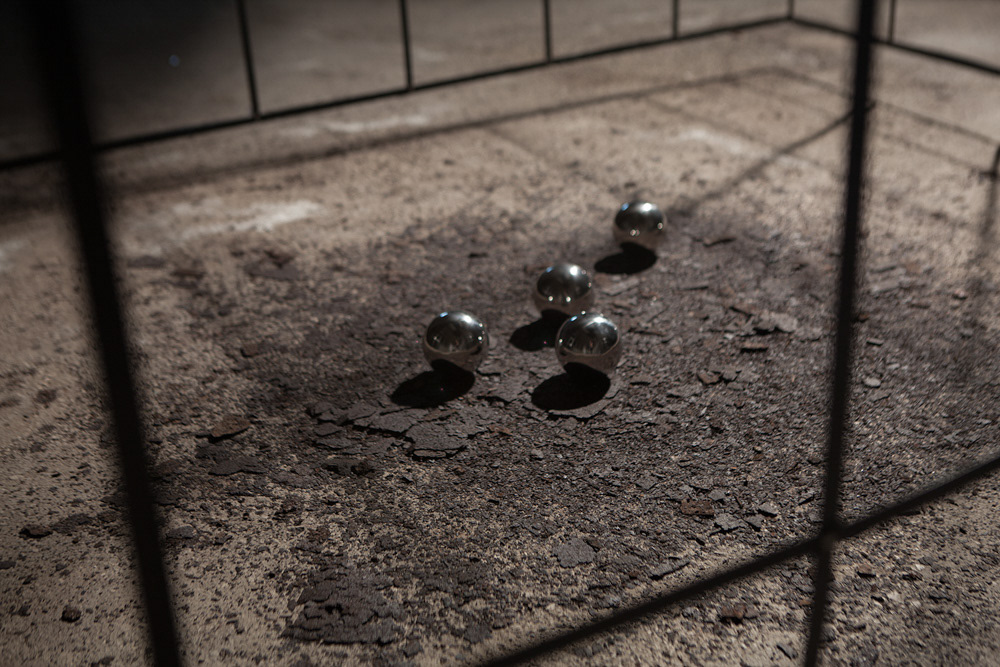
Ø 10 cm stainless steel balls
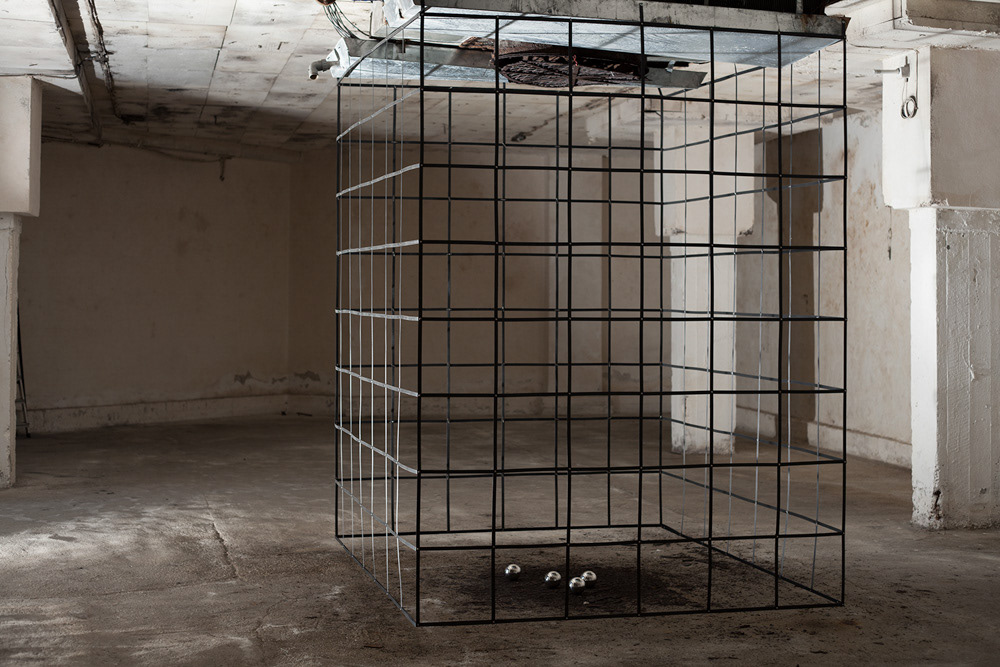
Installation view